









NewsBusiness & Economy
Boss of Turkmen Chemicals Giant Hopes to Save his Skin by Appointing Influential Colleague
30.12.2022
The city of Bereket in Turkmenistan’s Balkan province is one of the country’s main iodine production centers. The local plant is part of the state-run Turkmenhimiya concern, but the system in place there looks less like a planned economy than a feudal one: The director’s job is passed down within the Veliyev family, while employees are also made to work for the family’s private farm without pay. How the Bereket feudal estate grew and operates, and why the workers involved call themselves “powerless slaves” — in a turkmen.news report.
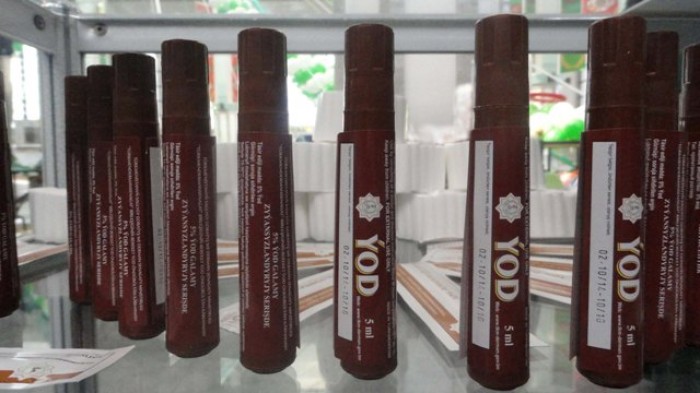
Turkmenistan is the world’s third-largest producer of iodine, and the Bereket plant in Balkan province accounts for a significant share of the country’s output. The plant has been transferred between various state agencies over the years and gone through several name changes. It is now part of the state-run Turkmenhimiya concern and bears the same name as the city, Bereket. Until recently, it was run by Guvanchmyrat Veliyev, who served as its director for more than 10 years in total.
Veliyev died more than a year ago. The plant’s head of the production workshop was appointed to replace him, and it appeared that the position would not remain in the family. But at the mourning ceremony held 40 days after Guvanchmyrat’s death, the position went straight to Veli Veliyev, the late director’s son. A turkmen.news source close to Turkmenhimiya says the elder Veliyev had paid a substantial sum to a former head of the state concern while he was still alive. That official was Dovrangeldi Sapbayev, who remained in the post until July last year.
Veli Veliyev inherited far more than a job — and more than the corruption system that is commonplace at major Turkmen enterprises. His father had become a true local bai, a wealthy landowner with his own farm and laborers. Employees of Bereket, who are themselves among those laborers, told turkmen.news how the Veliyevs built their position and what it means for those working under them.
The iodine production facility itself is located 85 kilometers from the nearest populated area, at the Oylegushluk facility. The site is in mountainous terrain and geographically falls within Serdar district, formerly known as Gazanjyk.
There is no reliable connection to the outside world, so the work is organized in shifts. Workers arrive for 15 days, complete their rotation and return home until the next one, when they are replaced by another group.
That is how it is supposed to work. In practice, however, some workers are kept on for another five days after their regular 15-day rotation. The extra shift, known as a subbotnik, is more like forced labor for a feudal lord. It lasts an entire workweek, and the workers receive no pay. When they ask why, Veliyev gives a simple answer: It is a subbotnik, and people are not paid for subbotniks.
The workers later discovered that the extra days are recorded in the company’s accounting system and that wages are in fact paid for them. The workers themselves, however, never see that money. It is taken by the people who have come to regard themselves as their masters.
In modern conditions, particularly at a state-owned enterprise, a manager is hardly all-powerful. To turn himself into a true feudal lord and slave owner, he needs people overseeing human resources and finances. Veli Veliyev has them: Bereket’s head of human resources, Rovshen Atayev, and accountant Ashyrberdi Nurberdiyev. The elder Veliyev brought both men into the operation, and they now support his son.
The plant’s human resources chief and accountant are the ones who run the scheme that funnels money into Veliyev’s pocket. And it is far from the only scheme. The plant has 240 employees, including administrative staff, on its payroll and pays them salaries. But official records list 305 employees. More than 60 are “dead souls,” and they are also included on the payroll with monthly salaries of 3,000 manats ($150). Their pay is transferred to fictitious bank cards kept by Veli Veliyev. Atayev and Nurberdiyev withdraw the money. Most of it goes to Veliyev, while the human resources chief and accountant keep a smaller share for their “hard” work.
But back to the “subbotnik.” The workers are sent to a construction site for a production facility at the Ters Akan iodine-bromine water deposit. Turkmenhimiya awarded a contract for development of the deposit to a private construction company, and an official tender was held for the project. So what do plant employees have to do with construction work there? They would ask the contractor’s representatives themselves — if they had ever seen them at the site.
Apparently, the project involves more than withholding workers’ wages for the “subbotnik.” Budget money allocated to the private company to pay for the construction itself also appears to have been appropriated. The “laborers” do the work for everyone, while Veliyev collects the money for everyone. He presumably passes part of it on to the head of the phantom construction company, whose identity could not be established.
Workers naturally complained. But the elder Veliyev, like his son today, gave them the same blunt response: If you don’t like it, submit your resignation and leave. The employees put up with it — for their jobs and their families. They also complained to the trade union committee, Turkmenhimiya management and law enforcement agencies in Balkan province. Their complaints went nowhere.
One more element completes the Veliyevs’ feudal domain: the Eshretli Toprak peasant farm. It was founded by Veli’s grandfather, Rejepmyrat Veliyev. This is no small suburban plot for growing fruit and vegetables for the family table, but a full-fledged business. Veli runs it himself, while the books are kept by — once again — Ashyrberdi Nurberdiyev. He runs another scheme there as well.
The farm’s products — meat, dairy products and vegetables — are recorded as food supplies for workers on rotation. Bereket’s accounting department then transfers payment to Eshretli Toprak. On paper, it looks like a positive arrangement, suggesting that the plant’s trade union is taking care of its employees.
In reality, plant workers buy their own meat, flour and other supplies for their rotations, while Veliyev moves money from the state coffers he was entrusted to manage into his own pocket.
The feudal lord profits here in several ways as well. Bereket provides his farm with machinery, fuel and spare parts. Eshretli Toprak employees are listed as plant workers, while the most difficult agricultural jobs are performed by hired laborers — internal migrants from other provinces whom Veliyev also ruthlessly exploits. And the farm’s products ultimately do not go to workers on rotation. They go to far more useful recipients: influential people in Balkan province, law enforcement officials and the audit department of Turkmenhimiya.
“A bribe can open the way even to heaven,” the iodine plant workers wrote. “By treating the enterprise as his personal property, Veliyev and his accomplices use bribes to silence everyone his subordinates turn to with complaints.”
What makes corruption in Turkmenistan distinctive is that it is not confined to isolated regions or sectors. It runs through the country’s official state and private institutions. Trade unions, which are supposed to defend workers’ rights; companies’ internal audit bodies; police and prosecutors, which are supposed to enforce the law — all have become part of the same system. Through their silence and protection, they effectively hand the Veliyevs their own “fiefs,” where they impose their rules and exploit people like slaves. The workers, however, do not intend to remain silent. And history has shown what becomes of feudal lords and feudal states.
30.12.2022
10.12.2022
24.03.2023

Foreign Singers Perform at Private Wedding After Concert in Ashgabat
14.10.2026
New Pretrial Detention Center Built in Dashoguz Province
14.10.2026
Leaked Warrant List Reveals How Turkmenistan Targets Critics Abroad
01.10.2026
Turkmenistan Halves Fuel Allowance For Travelers Leaving Country, Raises Fee For Each Extra Liter
11.08.2026

Fuel Shortages Plague Oil-Producing Turkmenistan
07.07.2026
Tell us!






Add comment
your e-mail will not be published